When choosing export markets, we usually look first at market size, population, import volume, or purchasing power. Experience in international markets shows that none of these alone turns a market into the “right” one.
For a company, a good target market is one that is reachable, defensible, and developable under today’s conditions.
A market may be large, in strong demand, and long a company’s main export destination—yet political shifts, financial limits, logistics issues, or rising partnership risk can shrink the chance of sustainable planning there.
For Iranian companies this matters more today. Over the past year and more, amid heightened regional political and military tension, the difference between the resilience of land and sea routes has become clearer. Disruption at sea can quickly affect freight cost, delivery time, and even the ability to ship. Land-border access is then no longer only a logistics plus—it can become part of strategic market assessment.
Iraq is a clear case of an important but high-risk market. It remains one of the most significant regional destinations for Iranian goods—yet domestic political instability, high economic sensitivity to regional shifts, political pressure on trade, and rising competition make relying on past conditions a risky choice.
The UAE, with its trade position, infrastructure, regional links, and hub role, has long been a key regional market. Recent Middle East developments show that for an Iranian firm, “important” does not always mean “reliable.” When cooperation can change quickly with politics and logistics, that risk must enter the company’s strategic calculus.
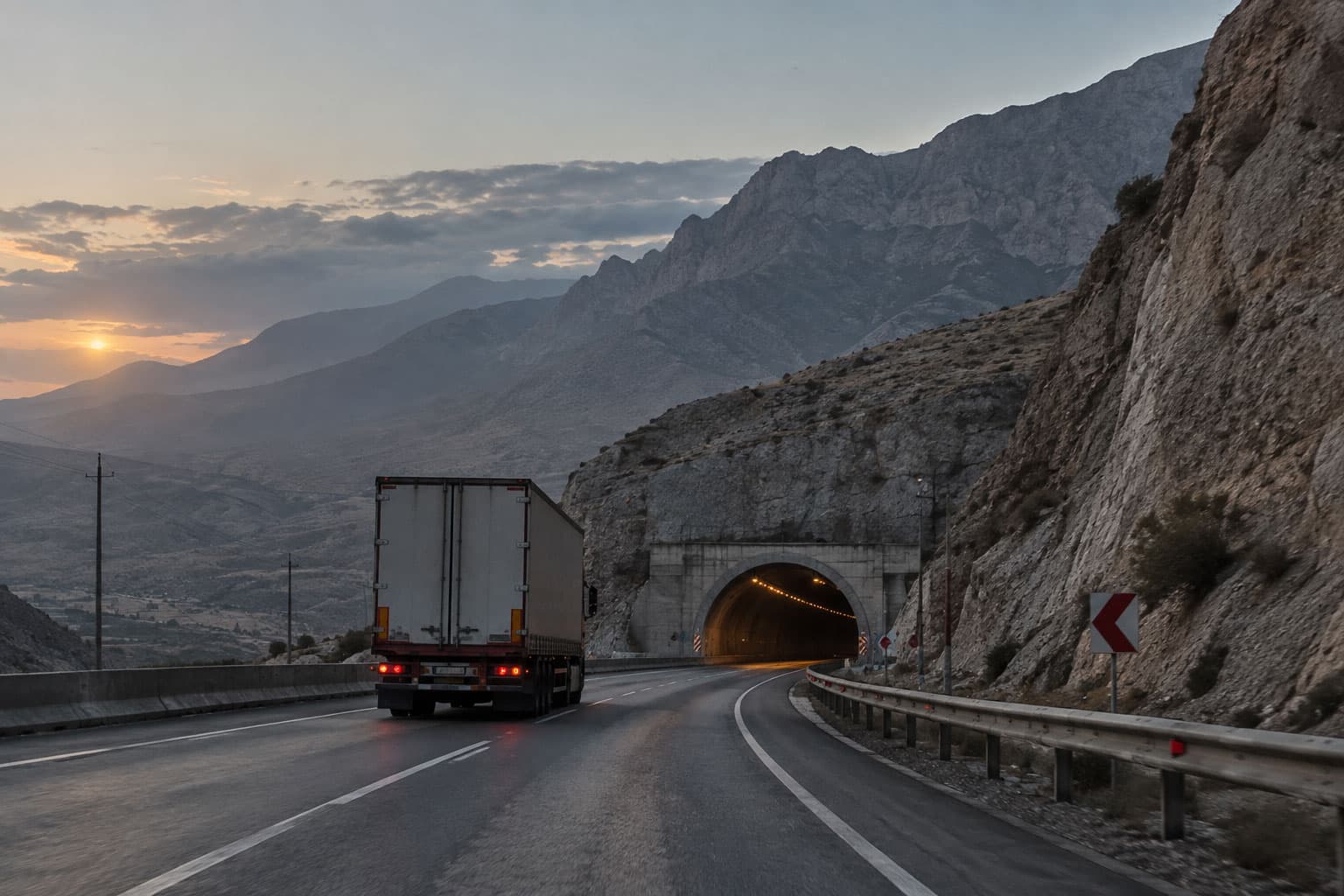
By contrast, a market like Armenia may not look like an exporter’s priority at first—limited population, a small economy. Yet a land border with Iran, relatively direct access, and the ability to keep trade links even when sea routes are disrupted can sharply raise its importance in a given period.
That does not mean abandoning large markets for small ones. The point is to redefine the criteria for choosing a market.
For Iranian companies, that review should happen on shorter cycles. Elsewhere a market strategy may hold for years; an Iranian firm may face, within months, shifts in shipping routes, banking limits, politics, or the feasibility of working with a country.
So an export market portfolio should not be designed once and left unchanged for years.
One of the greatest risks is concentrating all resources on a few traditional markets and only seeking alternatives after one of them is effectively gone. Losing a market can be sudden; replacing it usually is not.
Building a new market takes time: understanding it, forming ties, finding partners, building trust, adapting products, and shaping a sales network—none of which can start only after a crisis hits.
That is why alternative markets should not be a reaction to crisis—they should be part of the export strategy.
A company’s international management should continually ask which markets remain reliable, which need a different presence model, where dependence should fall, and which markets must be built from today for the future.
In the end, the goal should not be presence in the most countries or choosing the largest markets. The right market is one where you can build a presence, defend it, and grow it over time—and always keep an alternative ready when conditions change.